


In the rapidly evolving world of fiber optic infrastructure, splice closures play a pivotal role in protecting fiber splices from environmental hazards while ensuring long-term network reliability. As FTTH, 5G backhaul, and data center expansions accelerate into 2025, network planners and installers frequently face a key decision: Dome Type Splice Closures o horizontal splicing enclosures?
Also known as dome closure, dome type closure, dome splice closure, fiber dome closure, dome fiber optic splice closure, or horizontal fiber optic splice closure y horizontal junction closure / horizontal enclosure, these two designs dominate the market.
This exhaustive guide compares every aspect of Dome Type Splice Closures versus horizontal splicing enclosures: design principles, capacity, sealing performance, installation ease, applications, cost, durability, and 2025 innovations.
Whether you are a telecom engineer, procurement specialist, or contractor managing large-scale rollouts, this article — written by Dekam Fiber, a leading manufacturer of both dome and horizontal closures — will help you make the optimal choice for your project.
1. Understanding the Two Main Types of Fiber Optic Splice Closures
Fiber optic splice closures are protective housings that seal and organize optical fiber splices, providing mechanical protection, environmental sealing, and easy re-entry for maintenance.
1.1 Dome Type Splice Closures
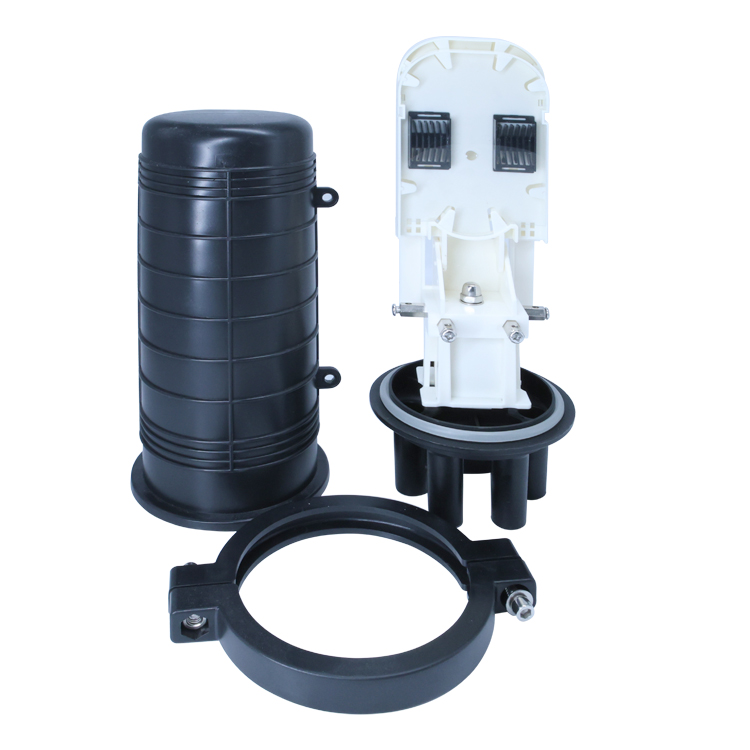
Dome Type Splice Closures (commonly called dome closure, dome type closure, or dome splice closure) feature a vertical, cylindrical design with a domed end cap that seals via a clamp and O-ring system.
Key characteristics:
- Vertical orientation
- Single end-entry (cables enter from bottom)
- Heat-shrink or mechanical sealing for ports
- Typically pole, aerial, or manhole mounted
Popular models: fiber dome closure, dome fiber optic splice closure — capacities from 24 to 576 fibers.
1.2 Horizontal Splicing Enclosures

Horizontal splicing enclosures (also known as horizontal fiber optic splice closure, horizontal junction closure, or simply horizontal enclosure) have an inline, “clam-shell” design that opens lengthwise.
Key characteristics:
- Horizontal orientation
- Multiple cable entries on both ends
- Gasket sealing with bolts or clamps
- Primarily underground, direct-buried, or wall-mounted
These two fundamentally different designs serve overlapping but distinct needs.
2. Design and Mechanical Structure Comparison
2.1 Dome Type Splice Closures
- Shape: Tall, cylindrical with rounded dome top
- Entry: Single end (bottom) with 4–8 oval/round ports
- Caza de focas: Clamp band + O-ring (heat-shrink sleeves on cables)
- Internal Tray: Stacked splice trays (up to 24 trays)
- Mounting: Pole brackets, aerial hanging, manhole brackets
The dome shape distributes pressure evenly, making dome splice closure exceptionally resistant to external forces.
2.2 Horizontal Splicing Enclosures
- Shape: Long, rectangular “box”
- Entry: Multiple ports on both ends (6–12 ports total)
- Caza de focas: Perimeter gasket + bolts/latches
- Internal Tray: Side-by-side or book-style trays
- Mounting: Wall, pedestal, direct bury
The inline design of horizontal fiber optic splice closure excels at mid-span access.
| Característica | Dome Type Splice Closures | Horizontal Splicing Enclosures |
|---|---|---|
| Shape | Vertical dome | Horizontal inline |
| Cable Entry | Bottom only | Both ends |
| Typical Capacity | 48–576 fibers | 24–288 fibers |
| Re-entry Method | Remove dome cap | Open clamshell |
| Pressure Resistance | Excellent (dome shape) | Good |
| Mid-span Access | Limited | Excellent |
3. Sealing and Environmental Protection
Both types achieve IP67 rating, but design affects performance.
3.1 Dome Closure Sealing Advantages
- Single large O-ring seal
- Fewer potential leak points
- Superior compression resistance (dome shape)
- Excellent in high-water-pressure manholes
Real-world testing: fiber dome closure models withstand 10 m water head for 30 days without leakage.
3.2 Horizontal Enclosure Sealing
- Long perimeter gasket
- More bolts/clamps needed
- Vulnerable at gasket corners
However, modern horizontal junction closure designs use advanced silicone gaskets and over-center latches for reliable sealing.
| Environmental Test | Dome Type Performance | Horizontal Performance |
|---|---|---|
| IP68 Water Immersion | Excellent | Very Good |
| Impact Resistance (IK10) | Excellent | Good |
| UV Resistance | Excellent | Excellent |
| Temperature Cycling (–40°C to +85°C) | Excellent | Very Good |
Dome fiber optic splice closure generally wins in harsh aerial/manhole environments.
4. Capacity and Scalability
4.1 Dome Type Splice Closures
- High capacity: up to 576 fibers (24 trays × 24 splices)
- Ideal for high-fiber-count feeder cables
- Easy tray stacking
4.2 Horizontal Splicing Enclosures
- Typical max 288–360 fibers
- Better for lower-count distribution
For large FTTx nodes, Dome Type Splice Closures are preferred.
5. Installation and Re-entry Comparison
5.1 Dome Closure Installation
- Vertical mounting simplifies aerial work
- Single-end entry reduces cable bending
- Fast clamp sealing (5–10 minutes)
5.2 Horizontal Enclosure Installation
- Inline entry perfect for direct bury
- Clamshell design allows mid-span splicing
- More time-consuming bolt tightening
Horizontal fiber optic splice closure excels in underground mid-span applications.
| Installation Factor | Dome Type | Horizontal |
|---|---|---|
| Aerial/Pole Ease | Excellent | Good |
| Underground Direct Bury | Good | Excellent |
| Mid-span Splicing | Difficult | Excellent |
| Re-entry Time | 10–15 minutes | 15–25 minutes |
6. Applications and Use Cases in 2025
6.1 Where Dome Type Splice Closures Excel
- Aerial and pole-mounted FTTH distribution
- Manhole and handhole installations
- High-fiber-count feeder routes
- Harsh environments (coastal, desert)
6.2 Where Horizontal Splicing Enclosures Shine
- Direct-buried cable routes
- Mid-span access points
- Underground vault installations
- Lower-density distribution networks
7. Cost Comparison 2025
| Capacity (fibers) | Dome Type Closure Price | Horizontal Enclosure Price |
|---|---|---|
| 48–96 | $25–$50 | $20–$45 |
| 144–288 | $60–$90 | $50–$80 |
| 288–576 | $90–$110 | $80–$100 |
Dome closures have ~10–20% premium due to larger housing and sealing system.
8. Innovations and Trends 2025–2030
- Gel-free dry sealing
- Integrated splitter modules
- Smart monitoring (temperature, humidity sensors)
- Higher port counts (32-port dome)
- Sustainable materials
Conclusion: Choosing the Right Closure for Your Network
Dome Type Splice Closures offer superior sealing, higher capacity, and easier aerial installation — making them ideal for modern FTTH and 5G deployments.
Horizontal splicing enclosures remain essential for underground mid-span and direct-bury applications.
The best networks use both strategically.
Dekam Fiber manufactures industry-leading dome splice closure, fiber dome closure, dome fiber optic splice closure, and horizontal fiber optic splice closure series — all with IP67 sealing, 2-year warranty, and full customization.
Need help selecting the perfect closure for your project? Contact Dekam Fiber today for samples, pricing, or expert consultation.
Your splices deserve the best protection — choose wisely.


 ES
ES  EN
EN  ID
ID  TL
TL  AR
AR  TH
TH  MS
MS  VI
VI  SW
SW  AM
AM  ZH
ZH