


In the explosive growth of Fiber to the Home (เอฟทีเอช) and 5G deployments worldwide, one unassuming component has become indispensable: the MST Box, or Multiport Service Terminal. These compact, weatherproof devices are the critical “last-mile” connection points that bring gigabit broadband from the distribution cable directly to homes, apartments, and businesses.
As of December 2025, over 1.8 billion FTTH connections are active globally, and MST boxes are deployed in the tens of millions — especially in North America, Europe, and Asia-Pacific where pre-terminated, plug-and-play architectures dominate new builds.
This comprehensive guide covers everything you need to know about MST boxes: their full name and definition, history, technical design, applications, advantages over traditional methods, installation best practices, leading manufacturers, 2025 innovations, and future outlook.
Whether you are a network planner, field technician, procurement specialist, or simply curious about modern broadband infrastructure, this article will become your definitive reference.
1. What Does MST Box Stand For? The Full Name and Definition
MST Box is industry shorthand for Multiport Service Terminal.
A Multiport Service Terminal is a hardened, environmentally sealed enclosure that provides multiple pre-connectorized output ports (typically 4, 8, 12, or 16) for drop cables, while accepting a single incoming feeder or distribution cable.
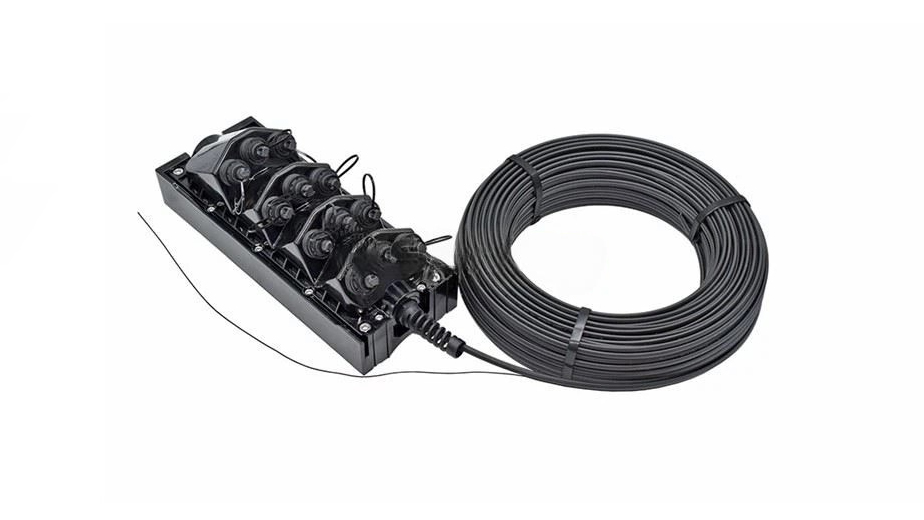
Key characteristics:
- Factory pre-terminated with hardened connectors (OptiTap, Mini-SC, Slim-SC, or full-size SC/APC)
- IP68-rated waterproof and dustproof
- UV-resistant, impact-resistant polymer housing
- Supports both fusion-spliced input and pre-terminated stub input
- Designed for pole, pedestal, handhole, aerial, or facade mounting
MST boxes are the cornerstone of pre-connectorized FTTH architectures, eliminating field splicing at the customer drop point and dramatically reducing installation time and skill requirements.
2. The Evolution and History of MST Boxes
The concept emerged in the early 2010s as FTTH deployments in North America (particularly Verizon FiOS and AT&T Fiber) sought ways to reduce labor costs and speed up connections.
Timeline
- 2011–2013: Corning introduces the original OptiTap hardened connector system and early 8-port terminals.
- 2014–2016: CommScope, PPC, and Clearfield launch competing hardened connector families (Mini-SC, Slim-SC, DLX).
- 2017: Multiport terminals become standard in U.S. rural broadband programs (CAF II, ReConnect).
- 2018–2020: 12-port and 16-port MST boxes appear as MDUs (multi-dwelling units) dominate deployments.
- 2021–2023: Adoption explodes in Europe (Altice France, Deutsche Telekom) and Asia-Pacific (China Mobile, NBN Australia).
- 2024–2025: Integration of smart features (RFID tracking, remote monitoring) and higher port counts (24-port prototypes).
By late 2025, MST boxes have become the default drop strategy for >70% of new FTTH connections in North America and >50% globally.
3. How MST Boxes Work: Technical Architecture
3.1 Input Options
- Stubbed (Pre-terminated feeder): Factory-installed 50–500 m stub cable with hardened connector for plug-and-play into a tap or splitter.
- Splice-in: Feed-through port for splicing to distribution cable in the field (using standard splice closure inside the MST).
3.2 Internal Structure
- 1×N passive optical splitter (for PON architectures) or direct fanout (for P2P)
- Pre-installed hardened adapters (OptiTap-compatible or Mini-SC)
- Gel-filled or dry-block water-blocking
- Internal fiber management trays with minimum 30 mm bend radius
3.3 Output Ports
- Hardened full-size SC/APC or LC/APC adapters
- Dust caps with IP68 seal
- Individual port shutters or caps
3.4 Mounting & Environmental Ratings
- Pole mount brackets, strand clamps, pedestal adapters, facade brackets
- Operating temperature: –40°C to +85°C
- UV resistance: 20+ years
- Impact rating: IK10
4. Primary Applications and Use Cases in 2025
4.1 Single-Family Homes (SFU)
Most common use: 4-port or 8-port MST mounted on utility pole or pedestal, serving 4–8 homes with pre-terminated drop cables (50–300 m).
4.2 Multi-Dwelling Units (MDU)
12-port or 16-port MST in basement or riser, feeding individual apartments with factory-terminated flat drop cables.
4.3 Rural and Aerial Deployments
Hardened 8-port MST on strand, serving scattered homes along rural routes — dramatically faster than traditional splicing.
4.4 5G Small Cell and Fronthaul
MST boxes with 4–8 ports used to distribute fiber to small cell sites from a central hub.
4.5 Business Parks and Campus Networks
Higher-port-count MSTs feeding multiple office buildings or warehouses.
4.6 Temporary or Event Networks
Portable MSTs for festivals, construction sites, or disaster recovery.
5. Advantages of MST Boxes Over Traditional Splicing
| Factor | Traditional Field Splicing | MST Pre-terminated |
|---|---|---|
| Installation time per drop | 45–90 minutes | 5–15 minutes |
| Required technician skill | High (fusion splicing) | Low (plug-and-play) |
| Weather dependency | High (cannot splice in rain) | None |
| First-time success rate | 85–92% | 99%+ |
| Total installed cost per home | $180–$320 | $120–$220 |
| Return truck rolls | 8–15% | <2% |
Real-world data from U.S. operators (2024–2025): using MST reduced average connection cost by 35–45% and cut activation time from 7–14 days to 1–3 days.
6. Detailed Technical Specifications (2025 Standards)
| พารามิเตอร์ | Typical Value |
|---|---|
| Port Count | 4, 8, 12, 16 (24 emerging) |
| Insertion Loss (per port) | ≤0.3 dB (including connector) |
| Return Loss | ≥60 dB (APC) |
| ประเภทขั้วต่อ | OptiTap, Mini-SC, Slim-SC, full SC/APC |
| Splitter Ratio (PON) | 1:4, 1:8, 1:12, 1:16 |
| Input Cable Stub Length | 50–500 m (custom) |
| อุณหภูมิในการทำงาน | –40°C to +85°C |
| ระดับการป้องกันน้ำและฝุ่น (IP) | IP68 (2 m / 14 days submersion) |
| ความต้านทานต่อแรงกระแทก | ไอเค10 |
| UV Resistance | 20+ years |
7. Installation Best Practices and Step-by-Step Guide
Phase 1: Planning
- Determine port count based on take-rate (typically 1.5–2× expected homes)
- Choose stubbed vs splice-in based on feeder cable type
Phase 2: Mounting
- Select location (pole, pedestal, facade)
- Install mounting bracket
- Secure MST with stainless straps or bolts
Phase 3: Input Connection
- Stubbed: plug hardened connector into tap/splitter
- Splice-in: open closure, splice feeder fibers to internal pigtails
Phase 4: Drop Cable Deployment
- Route pre-terminated drop cable from home to MST
- Clean connector endface
- Insert into port — audible click confirms connection
- Secure drop cable with clips
Phase 5: Testing
- Use OTDR or power meter to verify ≤0.5 dB total drop loss
- Document port assignment
Total time per home: 10–20 minutes vs 60–120 minutes with splicing.
8. Innovations and Trends in MST Boxes for 2025–2030
8.1 Higher Port Density
24-port and 32-port prototypes for ultra-dense MDU.
8.2 Smart MST
- RFID/NFC tags for automatic inventory
- Integrated OTDR monitoring ports
- Environmental sensors (temperature, humidity)
8.3 Universal Compatibility
Hybrid adapters accepting OptiTap, Mini-SC, and full SC in the same box.
8.4 Sustainable Materials
Recycled ocean plastic housings, biodegradable gaskets.
8.5 Integrated Power
Hybrid fiber-power MSTs for 5G small cells and smart poles.
9. Cost Analysis and ROI
| Item | Traditional Splicing (per home) | MST Pre-terminated (per home) |
|---|---|---|
| Labor (technician time) | $120–$200 | $40–$80 |
| วัสดุ | $60–$100 | $80–$120 |
| Truck rolls / rework | $50–$150 | $0–$20 |
| Total | $230–$450 | $120–$220 |
| 10,000-home project savings | — | $1.1–$2.3 million |
Payback period for MST adoption: typically <12 months.
Conclusion: Why MST Boxes Are the Future of FTTH
Multiport Service Terminals have transformed fiber deployment from a skilled craft into a scalable, repeatable process. They deliver:
- 50–70% faster connections
- 30–50% lower installed cost
- Dramatically higher first-time success rates
- Future-proof flexibility for PON upgrades
In 2025 and beyond, any serious FTTH program that is still relying primarily on field splicing is leaving money and time on the table.
Ready to modernize your FTTH deployment?
Contact Dekam Fiber today for samples, pricing, or a customized MST solution tailored to your network.
The future of fiber is pre-terminated — and it starts with the right MST box.


 TH
TH  EN
EN  ID
ID  TL
TL  ES
ES  AR
AR  MS
MS  VI
VI  SW
SW  AM
AM  ZH
ZH