


In 2026, fiber optics for drones is set to become one of the fastest-growing segments in the global fiber optic industry. From military kamikaze and loitering munitions to commercial inspection drones, delivery systems, and advanced surveying platforms, the integration of optical fiber into drone technology is no longer a niche innovation — it is becoming a mainstream requirement for high-performance, jam-proof, and ultra-reliable unmanned aerial operations.
At Dekam-Fiber, we have been at the forefront of developing specialized fiber optic solutions for drone applications, including lightweight, high-strength, bend-insensitive fibers designed specifically for fiber-guided drones and tethered UAV systems. This comprehensive guide explains exactly why fiber optics for drones will explode in popularity in 2026, the technical advantages that make it superior to traditional radio and GPS guidance, the military and commercial drivers behind the surge, the key technological breakthroughs enabling mass adoption, the economic and regulatory factors accelerating growth, and how forward-thinking companies are already positioning themselves to benefit from this trend.
Whether you are a drone manufacturer, defense contractor, infrastructure inspection company, logistics operator, or fiber optic professional, this article provides the complete picture of why fiber optics for drones is poised to become one of the most important growth stories in the aerospace and telecommunications industries in 2026 and beyond.
The Rise of Fiber-Guided Drones: From Niche to Mainstream in 2026
The concept of using optical fiber to guide drones is not new, but 2026 marks the year it transitions from experimental military use to widespread adoption across both defense and commercial sectors.
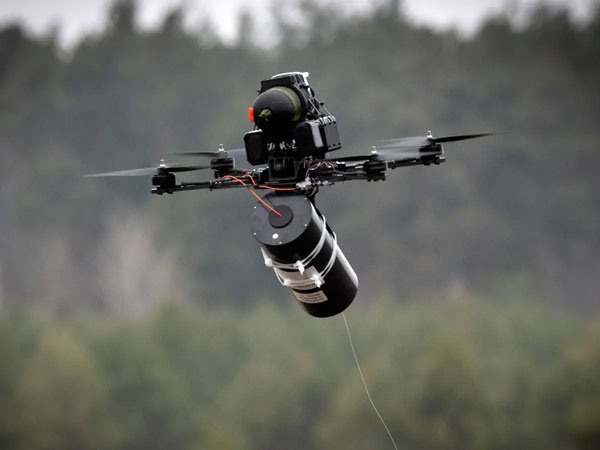
Fiber-guided drones, often called “fiber-optic tethered drones” or “fiber-controlled loitering munitions,” use a thin, lightweight optical fiber spool deployed from the drone or the ground station to maintain a continuous, high-bandwidth data link. Unlike radio-frequency (RF) or GPS-based systems that can be jammed, spoofed, or disrupted by electronic warfare, fiber optics provide a physical, unjammable connection that delivers real-time video, command signals, and sensor data with near-zero latency.
The surge in popularity is driven by lessons learned from recent conflicts, where electronic warfare has proven highly effective against traditional RF-controlled drones. Militaries worldwide are now prioritizing fiber-guided systems for their immunity to jamming, and commercial operators are following suit for applications where reliability and data security are paramount.
By 2026, industry analysts project that fiber optics for drones could account for 15–25% of the total specialty fiber market, with annual consumption exceeding 10000,000 kilometers globally — a figure that was almost unimaginable just three years ago.
Technical Advantages of Fiber Optics for Drones
Fiber optics offer several fundamental technical advantages that make them uniquely suited for drone applications, especially in contested or high-stakes environments.
Unparalleled Anti-Jamming Capability
Radio-controlled drones are vulnerable to jamming, spoofing, and electronic warfare. A fiber-optic link is a physical connection that cannot be disrupted by electromagnetic interference. This makes fiber-guided drones extremely difficult to neutralize electronically, giving operators a decisive advantage in modern warfare.
Extremely Low Latency and High Bandwidth
Fiber optics can transmit massive amounts of data with near-zero latency. A single fiber can carry multiple 4K or even 8K video streams simultaneously, along with telemetry, command signals, and sensor data. This enables real-time precision targeting and situational awareness that RF systems struggle to match.
Complete Data Security
Unlike RF signals that can be intercepted, fiber-optic communication is inherently secure. There is no electromagnetic signature to detect or eavesdrop on, making it ideal for sensitive military and critical infrastructure applications.
Immunity to GPS Denial
Many modern conflicts involve GPS jamming. Fiber-guided drones do not rely on satellite navigation for the data link, allowing them to operate effectively in GPS-denied environments.
Lightweight and Flexible Design
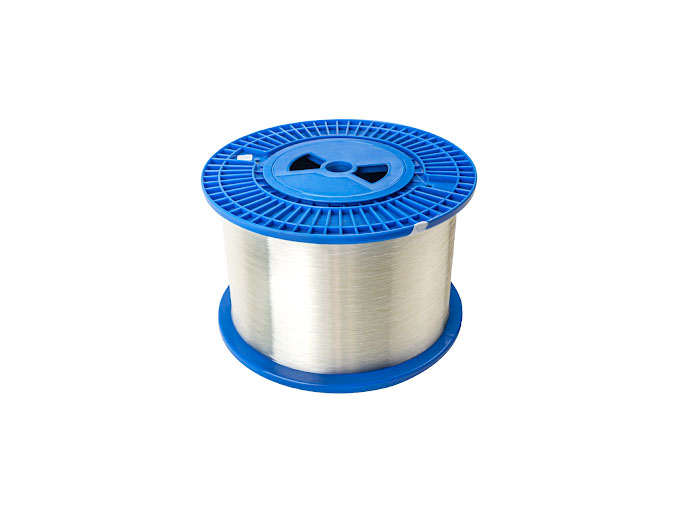
Modern micro fiber optic cables designed for drones are extremely lightweight (often under 5 grams per 100 meters) and highly flexible, allowing them to be spooled on small, lightweight reels without adding significant payload weight to the drone.
Dekam-Fiber has developed specialized micro fiber optic cables for drone applications that combine high tensile strength, low bend radius performance (G.657A2 grade), and ultra-low weight, making them ideal for both tethered and expendable drone systems.
Military Demand: The Primary Driver of Fiber Optics for Drones in 2026
The single largest catalyst for the explosion in fiber optics for drones is military adoption, particularly in ongoing conflicts that have demonstrated the effectiveness of fiber-guided loitering munitions.
Lessons from Recent Conflicts
Recent wars have shown that traditional RF-controlled drones are highly vulnerable to electronic warfare. Forces using fiber-guided kamikaze drones have achieved significantly higher success rates in contested airspace because the fiber link cannot be jammed.
As a result, major militaries are rapidly scaling up production of fiber-guided systems. A single modern fiber-guided drone can require 1000–30000 meters of specialized optical fiber per mission. When hundreds or thousands of such drones are deployed weekly, the cumulative fiber demand becomes enormous.
Specific Military Applications Driving Demand
- Loitering Munitions and Kamikaze Drones: Fiber guidance for precision strike missions.
- Reconnaissance and Surveillance Drones: High-bandwidth fiber links for real-time video and sensor data.
- Tethered UAVs for Persistent Surveillance: Fiber provides continuous power and data for long-endurance tethered drones.
- Swarm Coordination: Fiber links enable secure, jam-proof communication within drone swarms.
This military demand is highly concentrated on bend-insensitive fibers (G.657A1 and G.657A2) because drone spools require extreme flexibility and tight coiling without signal degradation.
Commercial and Civilian Applications of Fiber Optics for Drones
While military demand is the primary driver, commercial adoption is accelerating rapidly and will further boost popularity in 2026.
Infrastructure Inspection and Monitoring
Fiber-guided drones are ideal for inspecting bridges, power lines, pipelines, and wind turbines in areas with high electromagnetic interference or GPS denial.
Emergency Response and Disaster Management
In disaster zones where cellular and GPS networks are down, fiber-guided drones can provide reliable communication and real-time video feeds for search and rescue operations.
Precision Agriculture and Environmental Monitoring
Fiber links enable high-resolution, low-latency sensor data collection in remote or RF-congested agricultural areas.
Security and Perimeter Surveillance
Tethered fiber-guided drones offer persistent, jam-proof surveillance for critical infrastructure, borders, and high-security facilities.
Delivery and Logistics in Contested Environments
In areas with heavy RF jamming or strict spectrum regulation, fiber-guided delivery drones provide a reliable alternative.
These commercial applications are expected to grow exponentially in 2026 as the cost of fiber optic drone systems decreases and reliability advantages become more widely recognized.
Technological Advancements Making Fiber Optics for Drones More Practical
Several key technological breakthroughs are making fiber optics for drones more viable and cost-effective in 2026.
Ultra-Lightweight Micro Fiber Cables
New micro cables weighing less than 5 g/100 m with high tensile strength allow longer flight ranges without excessive payload penalty.
Advanced Bend-Insensitive Fibers
G.657A2 fibers with minimum bend radii as low as 5 mm maintain low attenuation even when tightly spooled on small drone reels.
High-Strength, Low-Weight Spool Designs
New composite spools and payout mechanisms minimize tangling and allow controlled fiber deployment during flight.
Hybrid Power + Fiber Tethered Systems
Emerging designs combine optical fiber with thin power conductors, enabling truly unlimited endurance for tethered drones.
Improved Blowing and Deployment Techniques
Advanced air-blowing and spool payout systems make field deployment faster and more reliable.
Dekam-Fiber is actively developing next-generation micro fiber optic cables specifically optimized for drone applications, focusing on weight reduction, bend performance, and mechanical durability.
Economic Factors Driving Adoption of Fiber Optics for Drones
Falling Cost of Specialized Fiber
As production scales up to meet military demand, the per-meter cost of high-performance drone fiber is expected to decline steadily throughout 2026 and 2027.
Lower Total Cost of Ownership
Although initial system cost is higher than RF drones, fiber-guided systems offer lower operational costs due to reduced jamming countermeasures, fewer lost drones, and higher mission success rates.
Government and Defense Budgets
Increased global defense spending on unmanned systems is creating substantial funding for fiber-guided drone programs.
Commercial ROI in Inspection and Surveillance
For commercial users, the reliability and data quality of fiber-guided systems often justify the higher upfront cost through reduced mission failures and higher-quality data collection.
Regulatory and Safety Advantages of Fiber Optics for Drones
Fiber-guided drones offer several regulatory and safety advantages:
- Reduced spectrum congestion (no RF emissions)
- Lower risk of interference with manned aviation or other systems
- Enhanced security and anti-hacking protection
- Easier compliance with strict RF emission regulations in sensitive areas
These factors are making fiber optics for drones more attractive to both military and civilian regulators.
Challenges and Limitations of Fiber Optics for Drones
Despite the advantages, fiber optics for drones still face some challenges:
- Limited range compared to RF (typically 10–30 km depending on spool capacity)
- Risk of fiber breakage during flight (though modern designs minimize this)
- Higher system complexity and cost for short-range missions
- Need for specialized payout mechanisms to prevent tangling
Ongoing research is rapidly addressing these limitations, and by late 2026 many of the remaining technical barriers are expected to be significantly reduced.
Market Forecast: Fiber Optics for Drones in 2026 and Beyond
Industry analysts project that the global market for fiber optics in drone applications will grow at a compound annual growth rate (CAGR) of 35–50% from 2025 to 2030, driven by both military and commercial demand.
By the end of 2026, annual consumption of specialized drone fiber is expected to exceed Ten million to fifty million kilometers, creating sustained pressure on supply chains and continued price strength for G.657A1 and G.657A2 grades.
How Dekam-Fiber Is Positioned to Support the Fiber Optics for Drones Market
At Dekam-Fiber, we have invested heavily in developing specialized micro fiber optic cables optimized for drone applications. Our products feature:
- Ultra-low weight and high tensile strength
- Superior bend performance (G.657A2 grade)
- Custom spool-compatible designs
- Full traceability and quality certification
- Competitive pricing with reliable supply chain
We are ready to support drone manufacturers, defense contractors, and commercial operators with high-performance fiber optic solutions tailored to the unique demands of unmanned systems.
Conclusion: Fiber Optics for Drones Will Be a Major Growth Story in 2026
The combination of proven military effectiveness, expanding commercial applications, rapid technological improvements, and strong economic drivers makes fiber optics for drones one of the most promising growth areas in the fiber optic industry for 2026 and beyond.
From jam-proof guidance systems for military drones to reliable, high-bandwidth links for commercial inspection and surveillance platforms, fiber optics offer capabilities that radio and GPS-based systems simply cannot match in contested or high-stakes environments.
At Dekam-Fiber, we are proud to be part of this exciting evolution. Our specialized fiber optic cables are engineered to meet the demanding requirements of modern drone systems while delivering the performance, reliability, and value that our customers expect.
If you are developing or deploying drone systems that require high-performance optical fiber, we invite you to contact the Dekam-Fiber team today. Our experts are ready to discuss your specific requirements and provide tailored solutions for fiber optics for drones.
The future of unmanned systems is fiber-connected. Let’s build it together.


 AR
AR  EN
EN  ID
ID  TL
TL  ES
ES  TH
TH  MS
MS  VI
VI  SW
SW  AM
AM  ZH
ZH