


In the sophisticated and rapidly advancing field of fiber optic networking, two components often spark confusion among professionals: the fiber optic patch panel and the 光纖終端盒. Both serve as critical points for terminating and managing optical fibers, but their designs, functionalities, deployment scenarios, and technical specifications differ profoundly.
This extended definitive guide examines every facet of the fiber optic patch panel vs fiber optic termination box comparison. We define each device in depth, explore construction and design variations, compare technical specifications, analyze applications across industries, provide detailed installation methodologies, evaluate cost implications with real pricing data, present case studies from global deployments, debunk common myths, address compatibility and migration strategies, and forecast innovations shaping these products through 2030.
Authored by Dekam Fiber — a leading manufacturer of both rack-mounted patch panels and wall/pole-mounted termination boxes serving operators in 50+ countries — this article offers practical, data-driven insights to help you select the optimal solution for your network needs.
1. Defining the Two Components: Core Purposes and Functions
1.1 What Is a Fiber Optic Patch Panel?
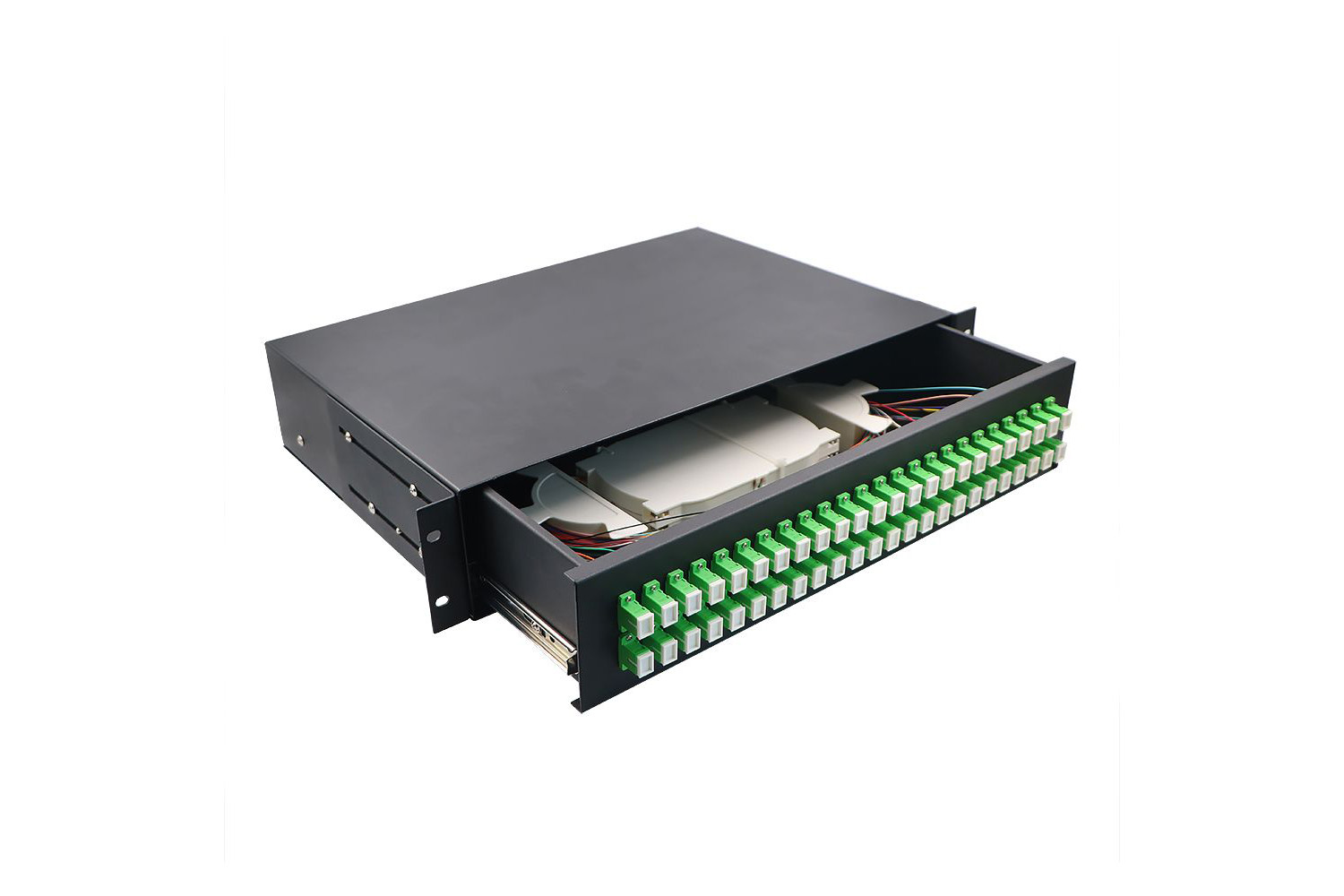
一個 fiber optic patch panel (also known as fiber distribution panel, fiber patch bay, optical distribution frame or ODF in larger formats) is a centralized, high-density termination and interconnection hub primarily designed for rack-mounted deployment in controlled environments.
Primary functions:
- Terminate incoming backbone, feeder, or distribution cables
- Provide modular adapter interfaces for cross-connection
- Enable flexible reconfiguration via patch cords
- Organize splices and manage slack with trays and routing
- Serve as the main distribution point in structured cabling
Typical locations:
- Data centers (main distribution area/MDA, intermediate distribution area/IDA)
- Telecom central offices and headends
- Enterprise main distribution frames (MDF) and intermediate distribution frames (IDF)
- Campus backbone rooms
- Broadcast and CATV facilities
Patch panels act as the “switchboard” of fiber networks, allowing technicians to quickly re-route connections without new splicing.
1.2 What Is a Fiber Optic Termination Box?
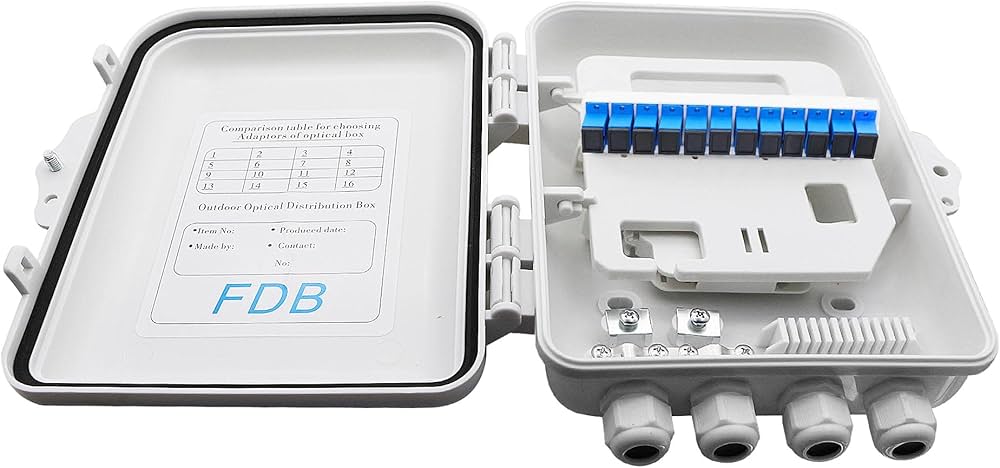
一個 光纖終端盒 (also called 光纖配線箱, fiber termination unit, wall-mounted fiber box, customer termination box, or FTTH terminal box) is a compact, localized enclosure that serves as the final termination point for fiber cables at or near the end-user location.
Primary functions:
- Terminate incoming drop or distribution cable
- Provide adapter ports for customer equipment (ONT, router)
- House splices or pre-terminated pigtails
- Act as network demarcation point
- Protect connections from dust/moisture (especially outdoor models)
Typical locations:
- Inside single-family homes (wall-mounted)
- Apartment building basements, risers, or floors
- Outdoor pedestals, cabinets, or pole-mounted
- Small business premises
Termination boxes are the “endpoint” where the provider’s network meets the subscriber’s equipment.
1.3 Fundamental Comparison Table
| 方面 | Fiber Optic Patch Panel | Fiber Optic Termination Box |
|---|---|---|
| Primary Role | Centralized cross-connect and distribution | Final customer demarcation and termination |
| 地點 | Rack in telecom room/data center | Wall/pole at customer site |
| Port Density | High (96–576 ports per rack unit) | Low–medium (4–48 ports) |
| Mounting | 19-inch rack | Wall, pole, pedestal |
| Reconfiguration Flexibility | High (easy patching) | Low (usually fixed) |
| Environmental Rating | Indoor (IP20/IP40) | Indoor/outdoor (IP55–IP68) |
| Typical Users | Network operators, data centers, enterprises | End-users, small businesses, FTTH subscribers |
| Splice Capacity | High (multiple trays) | Low (1–2 trays) |
2. Detailed Construction and Design Differences
2.1 Fiber Optic Patch Panel Construction
Patch panels are built for rack integration and high-density management.
- Chassis: Cold-rolled steel or aluminum with powder coating for durability.
- Front Panel: Modular adapter plates supporting SC, LC, MPO, ST, etc., with color-coded dust shutters.
- Rear Access: Multiple cable entry glands with strain relief boots and grounding bars.
- Internal Features: Sliding or fixed splice trays, cable routing rings, slack storage spools, labeling areas.
- Variants:
- Loaded (pre-installed adapters/pigtails)
- Unloaded (empty for custom loading)
- High-density sliding drawer
- Angled panels for better cable management
Modern panels include tool-less adapter plate installation.
2.2 Fiber Optic Termination Box Construction
Termination boxes prioritize compact size and environmental protection.
- Housing: ABS/PC plastic (indoor) or die-cast aluminum/metal (outdoor) with UV resistance.
- Door/Lid: Hinged with lock, latch, or screw for security and re-entry.
- Ports: Pre-installed adapters on front/bottom with dust caps.
- Internal: Compact splice tray, splitter slot (for PON), cable management clips.
- 密封: Rubber gasket, silicone seal, cable glands achieving IP65–IP68.
- Mounting: Back brackets for wall, pole straps, pedestal adapters.
Outdoor models feature grounding lugs and ventilation to prevent condensation.
2.3 Size, Form Factor, and Capacity Comparison
Patch panels: 1U (44 mm height) holds 96–144 ports; 4U up to 576 ports.
Termination boxes: 200–500 mm height, 4–48 ports.
Patch panels excel in density; termination boxes in compactness.
3. Functionality and Technical Specifications
3.1 Capacity and Scalability
Patch panels scale to thousands of ports in stacked racks.
Termination boxes are single-unit, limited to 48 ports.
3.2 Optical Performance
Both support premium adapters with ≤0.15 dB insertion loss and ≥65 dB return loss (APC).
3.3 Environmental Protection
Patch panels: Indoor only.
Termination boxes: Outdoor-rated with IP68 sealing.
3.4 Cable Management and Re-entry
Patch panels: Extensive routing, easy front access.
Termination boxes: Compact but sufficient for drops; re-entry via door.
4. Applications and Use Cases Across Industries
4.1 Fiber Optic Patch Panel Applications
- Data Centers: High-density cross-connect between switches, servers, and storage.
- Telecom Central Offices: ODF for feeder distribution to multiple PON OLTs.
- Enterprise Networks: MDF/IDF for structured cabling.
- Broadcast Facilities: Video headend patching.
- Hyperscale Campuses: Massive fiber management.
4.2 Fiber Optic Termination Box Applications
- FTTH Single-Family Homes: Wall-mounted box at entry point.
- Multi-Dwelling Units (MDU): Basement or floor box serving multiple apartments.
- Small Business Premises: Wall box for ONT termination.
- Outdoor Cabinets/Pedestals: Pole-mounted for rural drops.
- Industrial Sites: Rugged boxes for factory connections.
4.3 Hybrid and Overlapping Scenarios
Large FTTH nodes use rack-mounted “distribution panels” that function like patch panels but serve termination roles.
5. Installation and Deployment Methodologies
5.1 Installing a Fiber Optic Patch Panel
- Rack mounting in 19-inch cabinet
- Rear cable entry with strain relief
- Adapter plate installation
- Pigtail splicing or pre-terminated loading
- Front labeling and documentation
- Testing with OTDR/power meter
Requires controlled environment and skilled technicians.
5.2 Installing a Fiber Optic Termination Box
- Select mounting location (wall/pole)
- Install bracket
- Route incoming cable and seal entry
- Splice pigtails or plug pre-terminated drops
- Connect customer equipment
- Test end-to-end loss
Suitable for field techs; outdoor models require weather sealing.
6. Cost Analysis and Total Cost of Ownership 2026
6.1 Upfront Pricing
| Item | Patch Panel | Termination Box |
|---|---|---|
| 24-port loaded | $150–$300 | $40–$80 |
| 96-port high-density | $600–$1200 | N/A |
| Outdoor 12-port | N/A | $60–$120 |
6.2 Total Cost of Ownership
Patch panels higher initial but lower per-port.
Termination boxes lower initial but higher per-project labor if splicing.
Pre-terminated solutions (MST-boxes) reduce TCO for termination boxes.
7. Advantages and Limitations
7.1 Patch Panel
Advantages: Scalability, easy MACs, centralized management. Limitations: Rack space required, indoor only.
7.2 Termination Box
Advantages: Compact, outdoor-rated, simple deployment. Limitations: Limited capacity, harder re-entry.
8. Innovations and Trends 2026–2030
- Modular hybrid panels
- Pre-terminated high-port termination boxes
- Smart monitoring (RFID, sensors)
- Sustainable materials
Dekam Fiber leads with integrated solutions.
結論
Fiber optic patch panels for centralized high-density; fiber optic termination boxes for distributed end-points.
Dekam Fiber offers both — contact us for your needs.


 ZH
ZH  EN
EN  ID
ID  TL
TL  ES
ES  AR
AR  TH
TH  MS
MS  VI
VI  SW
SW  AM
AM